Apartment EV Charger Installation Sydney: Approvals & Costs
You have just bought an electric vehicle and you are excited to skip the petrol pump for good. Then reality hits. Your parking bay sits three levels below a Sydney apartment building with no charging infrastructure, and suddenly that shiny new EV feels less like freedom and more like a problem.
Thousands of strata residents across Sydney face this right now. The EV charger installation Sydney apartment owners need involves more than running a cable. It requires strata approval, careful electrical planning, and a switchboard that can handle the extra load.
DM Electrical is a Level 1 and Level 2 ASP electrical contractor serving the Northern Beaches and wider Sydney. With 24/7 emergency cover, a lifetime workmanship guarantee, and proven experience across residential, commercial, and high-end residential electrical work, the team has guided many Sydney strata schemes through approval, design, and installation.
This guide walks you through approvals, load management, realistic costs, and the right questions to ask before you sign anything.
Why EV Charger Installation in Apartments is Different

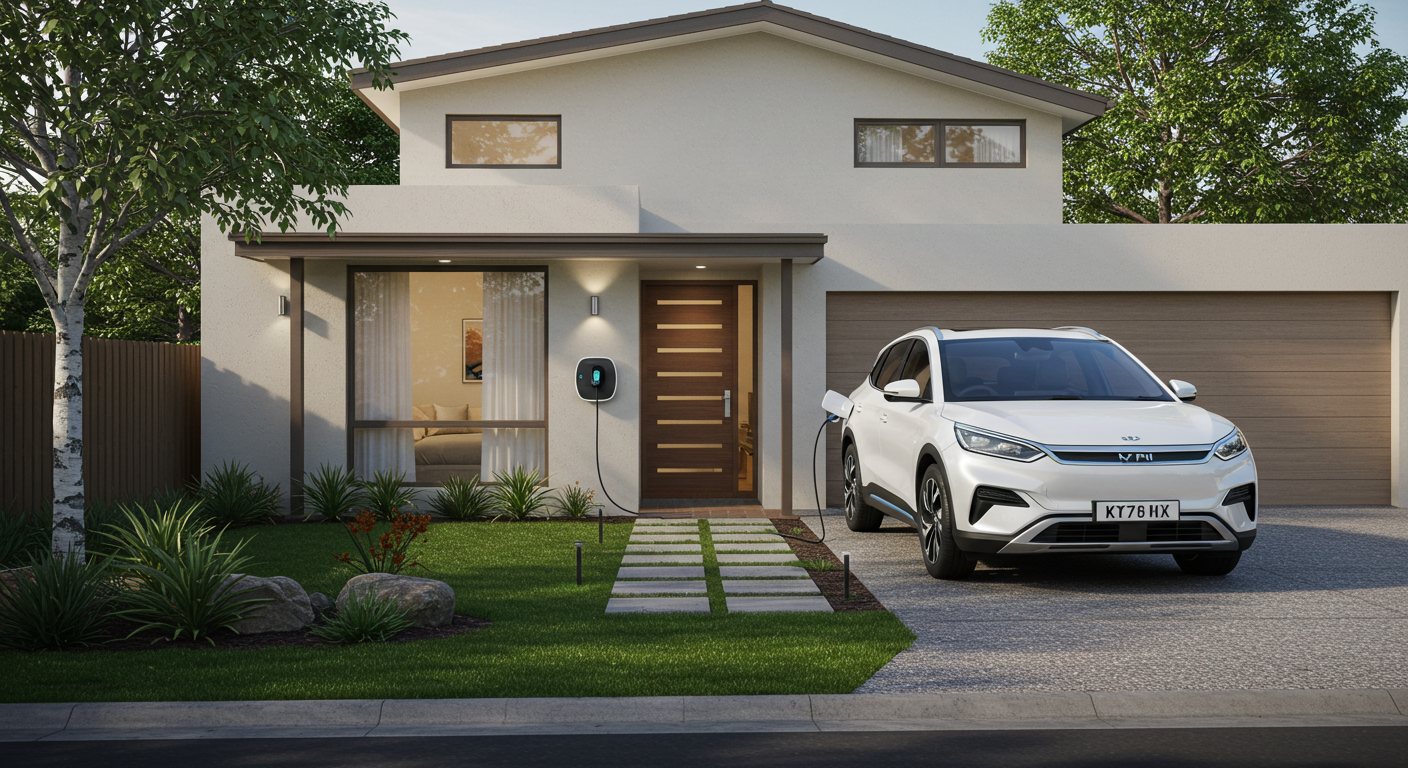
Standalone houses make EV charging simple. Run a dedicated circuit from the switchboard to the garage, install a wall charger, and the job is done. Apartments are a different world.
The first issue is ownership. Your parking bay may sit on common property, exclusive-use common property, or part of your lot. Each scenario changes who must approve the work and who pays. Get this wrong and the project can stall for months.
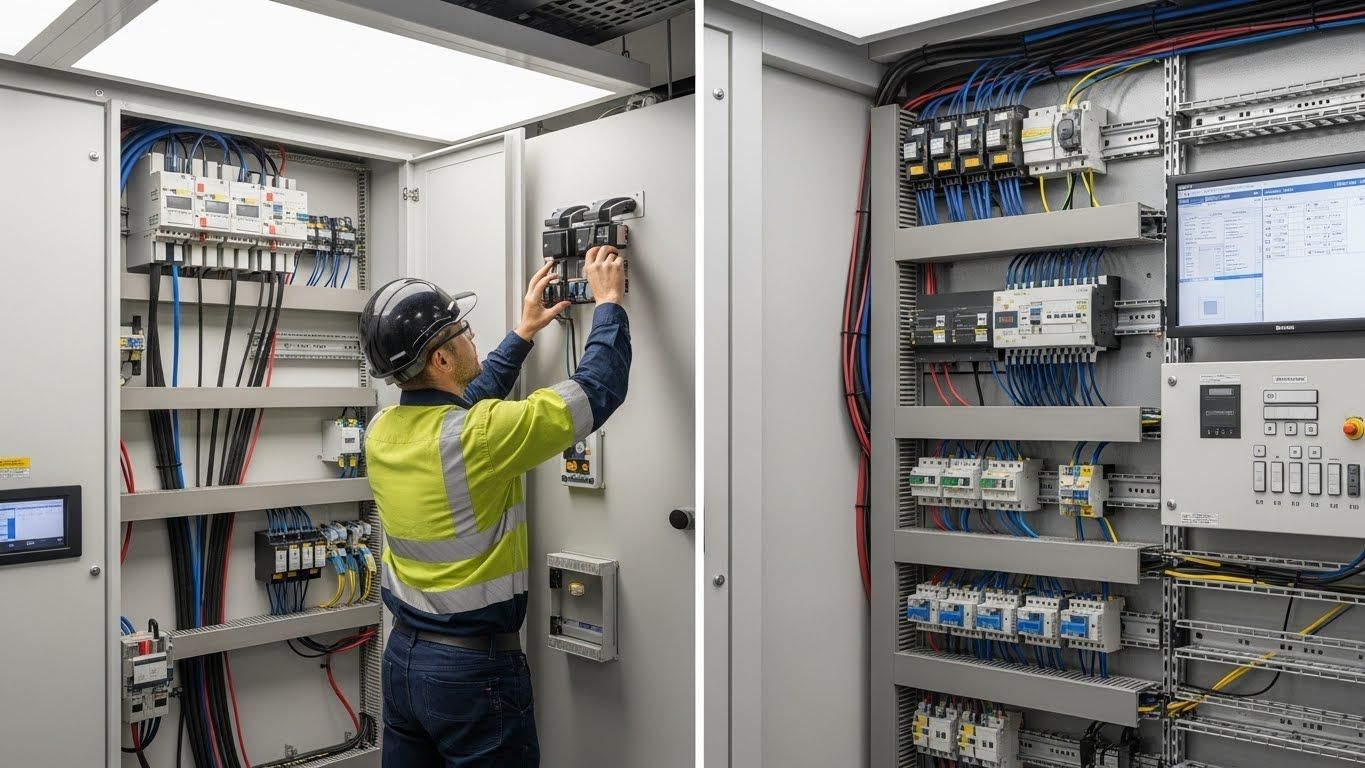
The second issue is electrical capacity. Most Sydney apartment buildings were wired decades ago for lifts, lights, and a handful of power points per unit. Nobody anticipated 30 cars drawing 7 kW each at 6pm. Adding an uncontrolled charger to an older switchboard can trip the main breaker, brown out neighbouring units, or create a fire risk.
The third issue is compliance. EV chargers in NSW must be installed by a licensed electrician and meet AS/NZS 3000 wiring rules, the AS/NZS 61851 EV charging standard, and any local network operator requirements. Many installations require Level 2 ASP work. NSW Fair Trading is clear that unlicensed electrical work voids insurance, fails inspections, and exposes the owners' corporation to substantial liability.
Safety note: Any electrical work on common property or the building’s main supply must be performed by a licensed electrician, and in many cases by a Level 2 ASP. There are no shortcuts here.
The hidden costs of getting it wrong are significant. A poorly planned installation often means tearing out cabling when a second resident wants charging. A failed inspection can delay sale settlements. An overloaded switchboard can damage appliances across the whole building, and the repair bill usually lands on the owners corporation.
Getting Strata Approval for Your EV Charger
Before any cabling work begins, you need strata approval. The Strata Schemes Management Act 2015 (NSW) treats most EV charger installations as either minor or major renovations, depending on the scope and whether common property is affected. The NSW Government Strata Hub provides detailed guidance specifically on EV charging in strata schemes.
Common pathways for approval
Three approval routes typically apply:
- Lot owner installation on common property: needs a special resolution at a general meeting (75 per cent approval), often via a by-law granting exclusive use of the cable pathway.
- Owners corporation-led shared infrastructure: a building-wide system funded through capital works or special levy, approved by majority resolution.
- Cosmetic or minor work within your own lot: only applies if the bay is part of your lot and no common property is touched, which is rare in apartment buildings.
What strata committees want to see
Strata committees rarely refuse EV charger installation in Sydney apartments outright, but they will scrutinise the proposal. Expect questions about:
- The proposed charger model and AS/NZS compliance certification
- Cable routing, fire ratings, and impact on common areas
- Who pays for electricity used (sub-metering)
- Future capacity for other residents who want chargers later
- Insurance, indemnity, and ongoing maintenance responsibility
A well-prepared proposal with quotes, drawings, equipment specifications, and a draft by-law will sail through far more easily than a one-page request. DM Electrical provides the technical documentation strata committees need to make confident decisions.
Building-wide vs single-bay installations
If yours is the first EV in the building, you have a choice. Push for a single-bay installation now, or champion a building-wide assessment that benefits every resident. The single-bay route is faster and cheaper for you alone. The building-wide route, while slower, almost always works out cheaper per resident over time, prevents repeated common property disruption, and adds long-term value to the strata scheme.
Load Management: The Key to Apartment EV Charging
Load management is the single most important concept in apartment EV charging. Get it right and a building with limited supply can comfortably charge ten or more EVs overnight. Get it wrong, and you trip the main breaker the first time three cars plug in at once.
What load management actually does
A load management system continuously monitors the total electrical demand of the building. When demand is high (lifts running, residents cooking, air conditioning at peak), it automatically reduces the power available to EV chargers. When demand drops overnight, it ramps charging back up. The Electric Vehicle Council has documented Australian apartment trials where this approach allowed many EVs to charge on existing supply without any network upgrade.
Typical apartment load management setup
The diagram below shows how the main components connect.
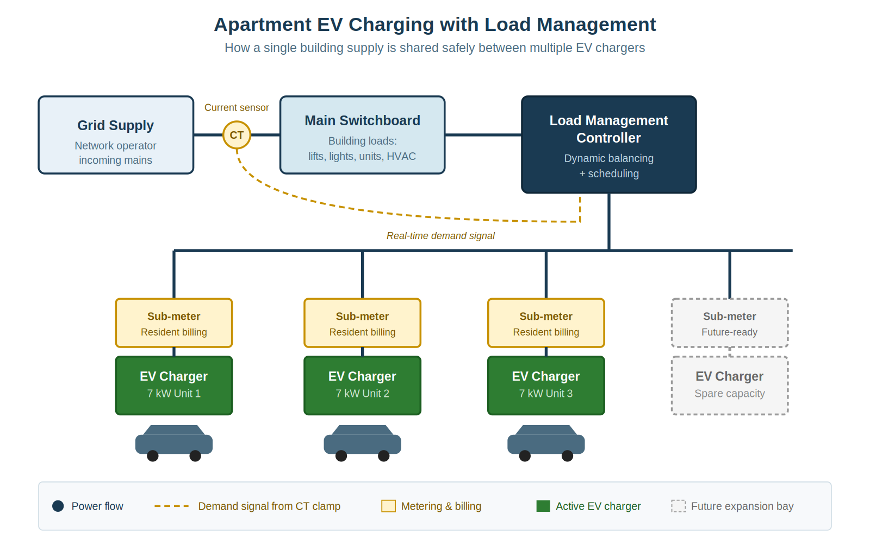
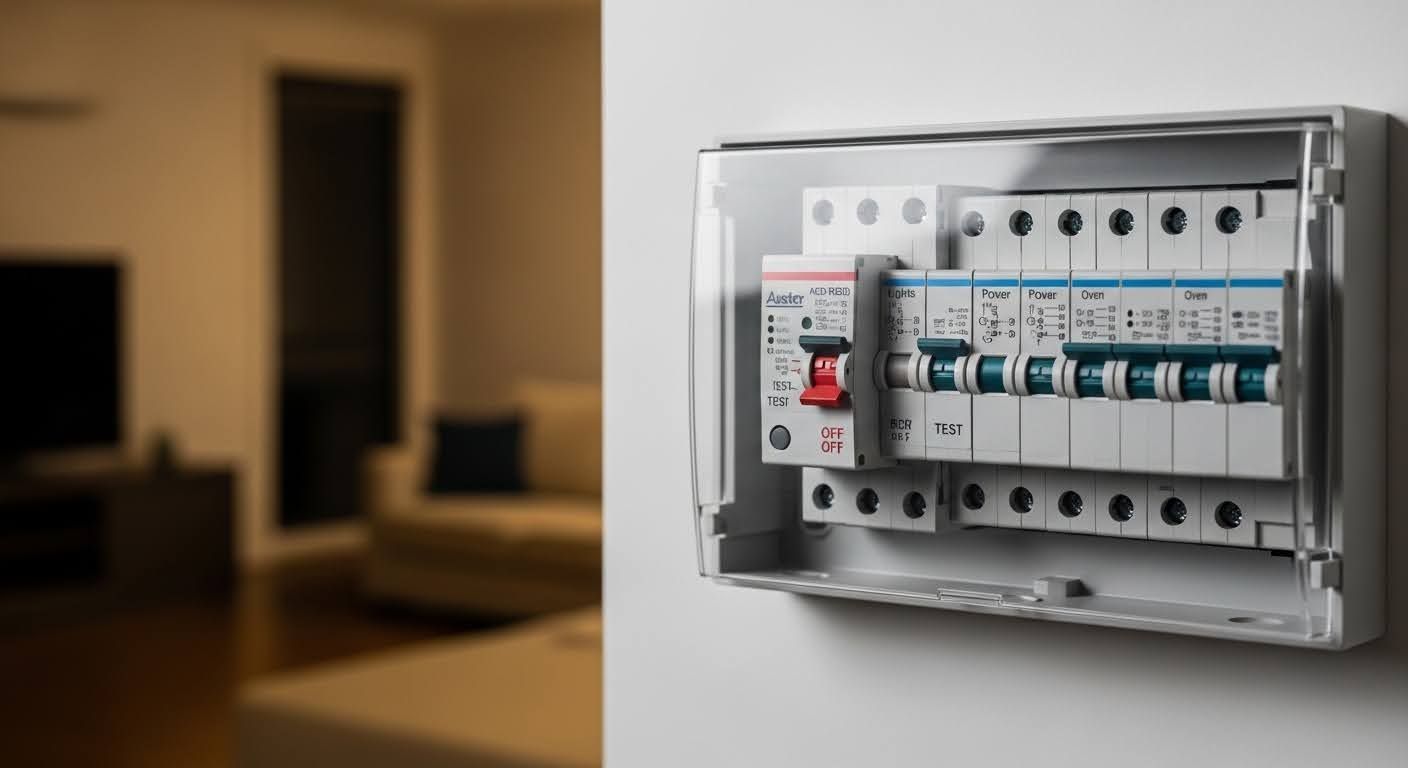
A typical setup includes a current transformer (CT) clamp on the main building incomer that measures total demand in real time, a load management controller that talks to each charger, individual EV chargers (usually 7 kW single-phase or 22 kW three-phase units), and sub-meters that bill each resident for their own electricity.
Why this matters for cost and feasibility
Without load management, a 20-bay building wanting to support EV charging would often need a supply upgrade from the network operator. That can cost tens of thousands of dollars plus months of waiting. With load management, the existing supply is shared intelligently and the upgrade can be avoided or deferred for years. For most Sydney apartment buildings, this is the difference between an affordable installation and a budget-busting infrastructure project.
EV Charger Installation Costs for Sydney Apartments
Honest cost information is hard to find online because every building is different. The ranges below reflect recent Sydney installations, not best-case marketing figures.
Single-bay installation costs
For one resident installing a charger in their own bay, total costs in a typical Sydney apartment building usually fall between $2,500 and $6,500. A rough breakdown:
- 7 kW wall charger: $900 to $2,200
- Cabling, conduit, and labour from switchboard to bay: $1,000 to $3,500
- Sub-meter and isolator: $400 to $800
- Strata by-law preparation and registration: $300 to $1,200
- Switchboard works if required: $500 to $2,000
Longer cable runs, basement parking, and older switchboards push costs upward. The further your bay sits from the meter room, the more you pay.
Building-wide installation costs
For a 20-bay building installing shared infrastructure, expect a total project cost between $40,000 and $120,000. Divided across residents, building-wide systems usually deliver a lower per-bay cost (often $2,000 to $4,000), no repeat strata approvals, centralised billing, and better long-term property value.
Ongoing costs
Electricity is the main ongoing cost. A typical EV uses around 12 to 18 kWh per 100 km. At Sydney residential tariffs of roughly 28 to 35 cents per kWh, that works out to less than $7 per 100 km. DM Electrical provides itemised, transparent quotes with no surprise variations.
The Risks of Cutting Corners on Electrical Work
Tempting as it might seem to plug a portable EV charger into a regular 10 amp power point in your garage, the risks are real. A standard 10 amp outlet was never designed for sustained EV current draw. Older Sydney apartment buildings often have power circuits that warm dangerously when loaded for eight to ten hours straight.
The risks of unlicensed or DIY electrical work include:
- Electrical fires in cable risers and ceiling spaces, where fire spreads fast
- Voided home and contents insurance after any electrical claim
- Voided strata building insurance, exposing the owners corporation
- Failed building inspections and delayed property sales
- Damage to the EV battery management system from poor power quality
Professional EV charger installation in Sydney by a Level 2 ASP is not just about doing the job neatly. It protects your investment, your neighbours, and the building itself. If anything goes wrong outside business hours, emergency electrical work is available 24/7, and our blackout action checklist is a useful reference to keep on hand.
How DM Electrical Handles Apartment EV Installations
DM Electrical follows a structured process for every strata EV charger installation, designed to give committees, owners, and property managers complete confidence.
Assessment and strata documentation
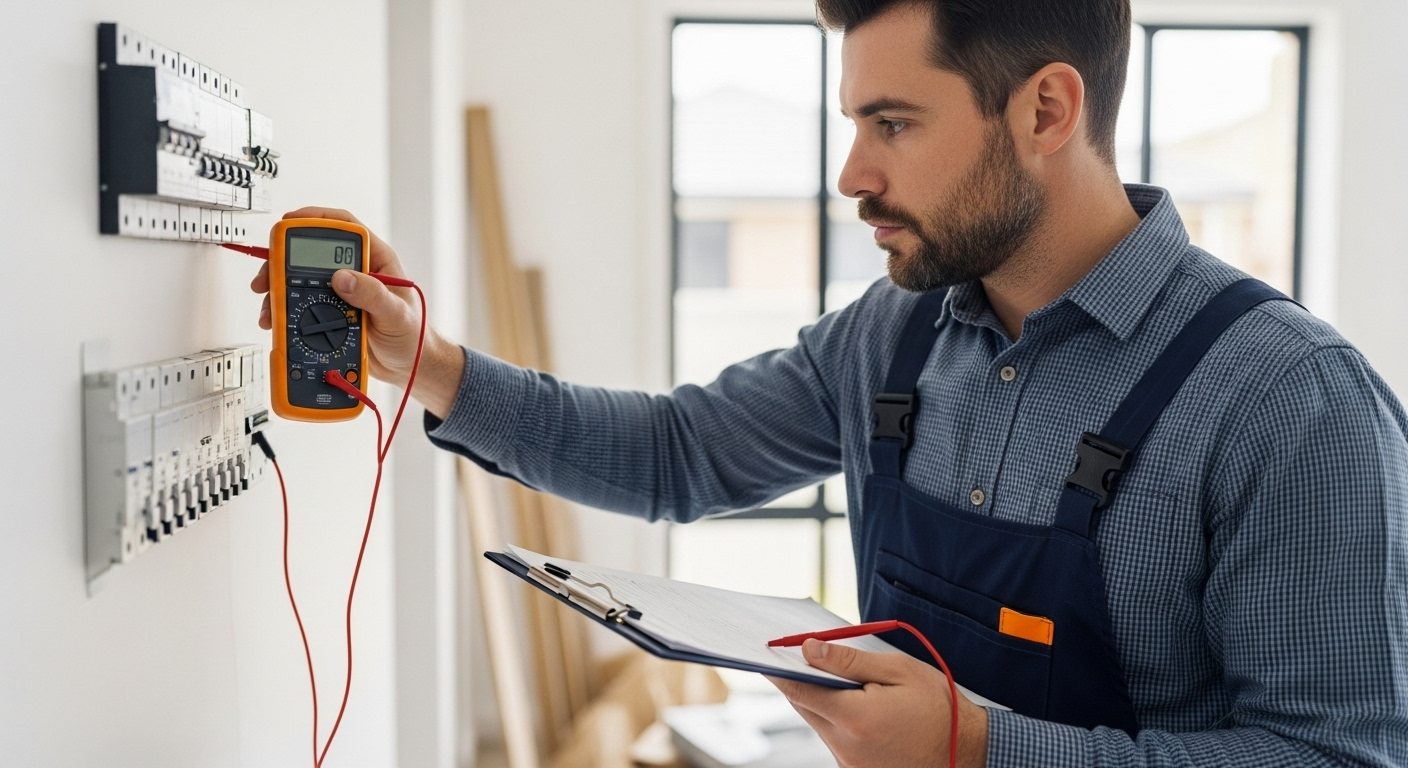
The process begins with a site assessment. A qualified electrician inspects your main switchboard, measures available capacity, walks the proposed cable route, and identifies any compliance issues.
You receive a written report and a transparent quote within a few business days, plus the technical drawings, equipment specifications, and compliance documentation strata committees need to approve the project.
Installation with minimal disruption
Once approved, work is scheduled around resident availability. Most single-bay jobs are completed in a single day. Larger building-wide projects are staged so common areas remain accessible.
All work is carried out by Level 1 and Level 2 ASP licensed electricians and backed by a lifetime workmanship guarantee. For background on how chargers work day-to-day, see our companion guide on installing a home EV charger.
Ongoing support
Every installation comes with documentation handed to the strata manager, a walkthrough for residents, and 24/7 emergency contact for any electrical issue that arises later. DM Electrical also handles blackouts, faults, and urgent repairs across the wider Sydney area for both residential and commercial clients.
Frequently Asked Questions
Do I need a Level 2 ASP for EV charger installation in Sydney apartments?
Often yes. Work that connects on the supply side of your meter or involves the main switchboard must be performed by a licensed Level 2 ASP. Work on the consumer side may only require a Level 1 electrician. DM Electrical holds both accreditations, so either pathway is covered without a second contractor.
How long does strata approval take?
Plan for two to four months. You usually need a formal motion at a general meeting, which only happens every few months unless an extraordinary meeting is called. Approval is faster when your proposal is complete: quote, drawings, equipment specs, and a draft by-law.
Can I charge my EV from a regular power point?
Technically yes, but it is slow and risky. A 10 amp power point delivers around 2 kW, so a full overnight charge is often not enough. Sustained EV loads on circuits not designed for them can also overheat cabling. A dedicated 7 kW charger is safer, faster, and the only option most modern strata by-laws will permit.
What if the building does not have enough supply capacity?
This is where load management changes the conversation. Most Sydney apartment buildings can support several EV chargers without any supply upgrade if a smart load management system is fitted. A capacity assessment by a Level 2 ASP will confirm what your building can handle.
Who owns the charger and pays for the electricity?
It depends on the model. Lot owner installations are owned by the resident, with a sub-meter ensuring they pay for their own use. Building-wide systems are owned by the owners corporation, with sub-metering allocating costs to individual users.
What happens when I sell my apartment?
The by-law granting exclusive use of the cabling and equipment generally transfers with the lot, and the new owner inherits both the charger and the obligations. This usually adds value to the apartment.
How do I find a qualified EV charger installer near me?
Look for a licensed electrical contractor with Level 1 and Level 2 ASP accreditation, EV-specific experience, and verifiable apartment project references. DM Electrical meets all these criteria and serves the Northern Beaches, North Shore, Eastern Suburbs, and wider Sydney.
Protect Your Property With Compliant Electrical Work
EV charger installation in Sydney apartments is not a weekend project. It involves strata law, electrical compliance, load management, and careful cost planning. Done well, it adds long-term value to your apartment and supports the building’s transition to electric transport. Done badly, it creates safety risks, compliance failures, and disputes that can drag on for years.
Whether you are a single owner looking at your own bay, a strata committee planning shared infrastructure, or a property manager handling multiple buildings, DM Electrical offers the Level 1 and Level 2 ASP expertise to deliver a safe, compliant installation backed by a lifetime workmanship guarantee.
Ready to take the next step? Call DM Electrical on
0410 144 047 for a site assessment and transparent quote, or visit dmelectric.com.au/ev-chargers. For urgent issues, our 24/7 emergency electricians are ready when you need them.